


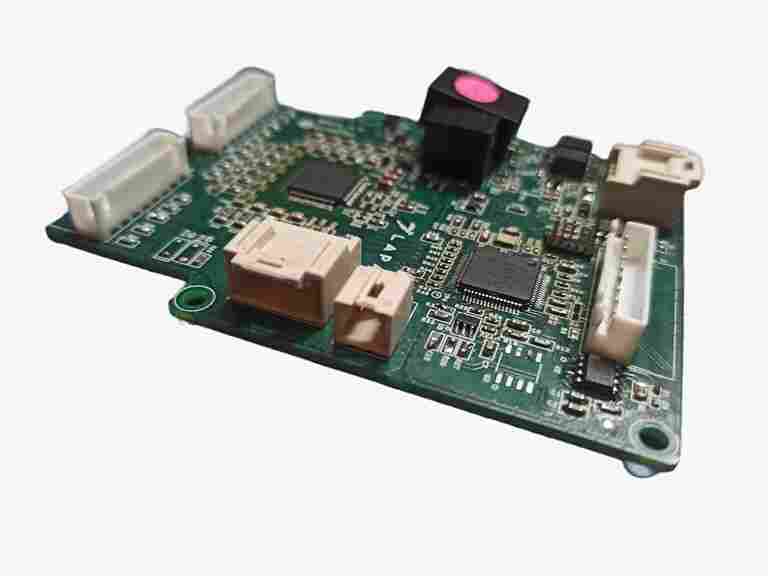
logic board
The term "logic board" typically refers to a key electronic component within the BMS. The logic board is responsible for processing data, executing control algorithms, and making decisions to manage the battery pack effectively.
A Battery Management System manages the health of the battery pack installed in electric vehicles. It acts as a safeguard against various issues that can cause the battery to malfunction.
The Central Control Unit (CCU) and Local Control Unit (LCU) in the Battery Management System framework help improve system performance, safety, and cell management.
A Battery Management System AKA BMS monitors and regulates internal operational parameters, i.e. temperature, voltage and current during charging and discharging of the battery.
FUNCTIONS
In technical terms, the BMS estimates the SoC (State of Charge) and SoH (State of Health) of the battery to improve safety and performance. It avoids over-charging and over-discharging of the battery pack. This way, it maintains charge level within maximum and minimum allowed capacity to prevent sudden accidents [explosion].
A Battery Management System is an essential component used to monitor and control rechargeable batteries, ensuring their safe and efficient operation. The logic board within a BMS handles various functions related to battery management. While I can provide a general overview of what a BMS logic board might involve, it's important to note that specific details can vary depending on the manufacturer, application, and battery type.
BMS logic board can vary widely depending on factors such as the battery chemistry (lithium-ion, lead-acid, etc.), intended application (electric vehicles, renewable energy storage, consumer electronics).
POWER BOARD
The term "power board" typically refers to an electronic component within the BMS responsible for managing power-related functions.
The power board is crucial for controlling the flow of energy within the battery system.
The power board is a critical component within the Battery Management System that focuses on power-related functions, ensuring safe and efficient operation of the battery pack in electric vehicles and other applications.
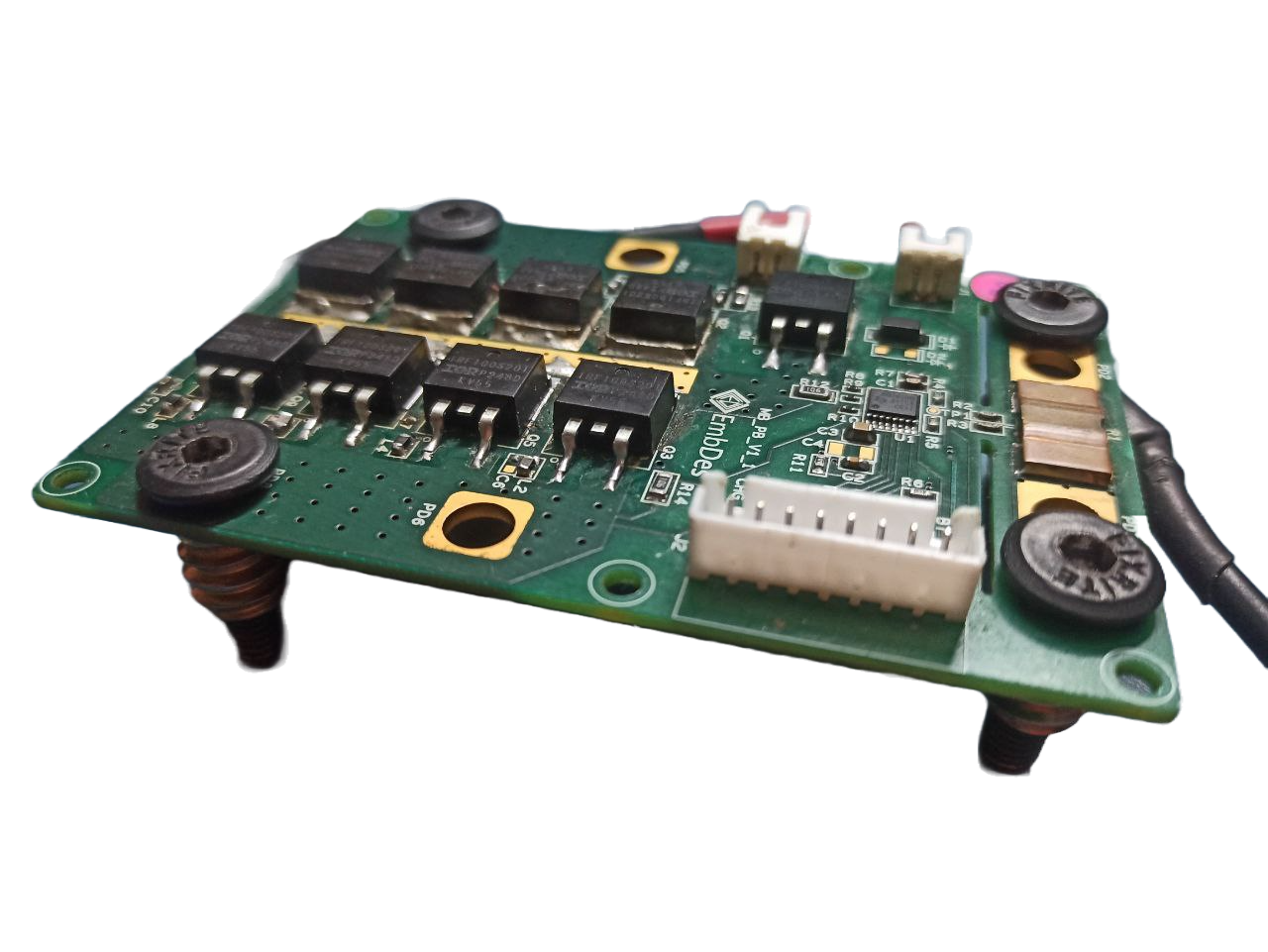
The specific design and components of the power board within an EV BMS can vary depending on the vehicle
Functions of a Power Board in an EV:
Power Distribution: The power board manages the distribution of high-voltage electrical power from the battery pack to different subsystems within the vehicle, such as the motor controller (inverter) and other power-hungry components.
Inverter Control: In an electric vehicle, the power board often interfaces with the inverter, which converts direct current (DC) from the battery into alternating current (AC) to drive the electric motor. The power board may handle the communication and control signals between the inverter and other vehicle systems.
Voltage Regulation: The power board may include voltage regulation and protection circuitry to ensure that the high-voltage power supplied to various components remains within safe and optimal operating limits.
Safety Features: EV power boards often incorporate safety features such as overcurrent protection, overvoltage protection, and temperature monitoring to prevent potential hazards and ensure the safe operation of the vehicle.
Communication Interfaces: The power board might have communication interfaces (e.g., CAN bus) to exchange data with other vehicle systems, including the Battery Management System (BMS) and the vehicle's main control unit.
How Does the BMS works ?
A battery management system (BMS) is any electronic system that manages a rechargeable battery (cell or battery pack), such as by protecting the battery from operating outside its safe operating area, monitoring its state, calculating secondary data, reporting that data, controlling its environment, authenticating it. A Battery Management System (BMS) is a complex electronic system designed to monitor, control, and optimize the performance, health, and safety of a battery pack.
It plays a crucial role in various applications, including electric vehicles, renewable energy systems, and portable electronics
Working Management of BMS
The working of a battery management system is determined by the complexity of the electronic components available on board. Let we discuss the working in details by considering a standard BMS with minimal components for optimum performance.
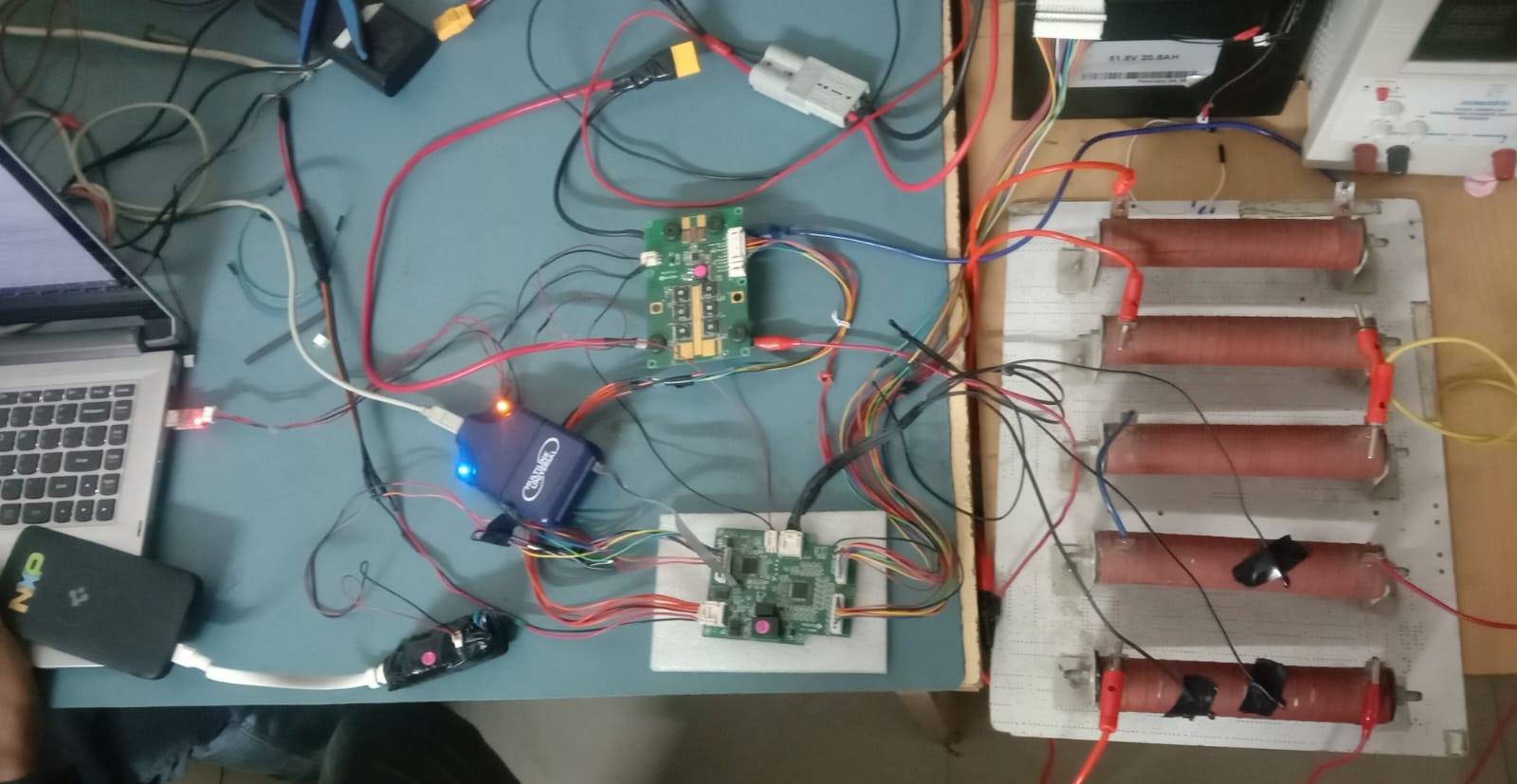
The microcontroller of the BMS measures the cell voltage and current in real-time and based on that it switches the MOSFETs. The BMS uses only one bus for charging and discharging. Initially, both charging and discharging FETs are off so there is no current flow.
The microcontroller of the BMS senses the voltage at the input and it turns on the charging MOSFET which again starts charging the battery.
Cell balancing
Cell balancing is a crucial function within a Battery Management System (BMS) that ensures the individual cells or modules within a battery pack are charged and discharged uniformly.
Cell balancing helps maintain consistent cell voltages, which is essential for optimizing the performance, capacity, and lifespan of the overall battery system.
When any one cell in the battery pack exceeds the Start Balancing voltage, the BMS will begin the balancing algorithm for all cells. The BMS will look for the lowest cell, then place a load on all cells which are more than the maximum difference in voltage above the lowest cell.
The difference in the cell voltages are corrected instantaneously as much as possible or gradually by using by-passing cells.
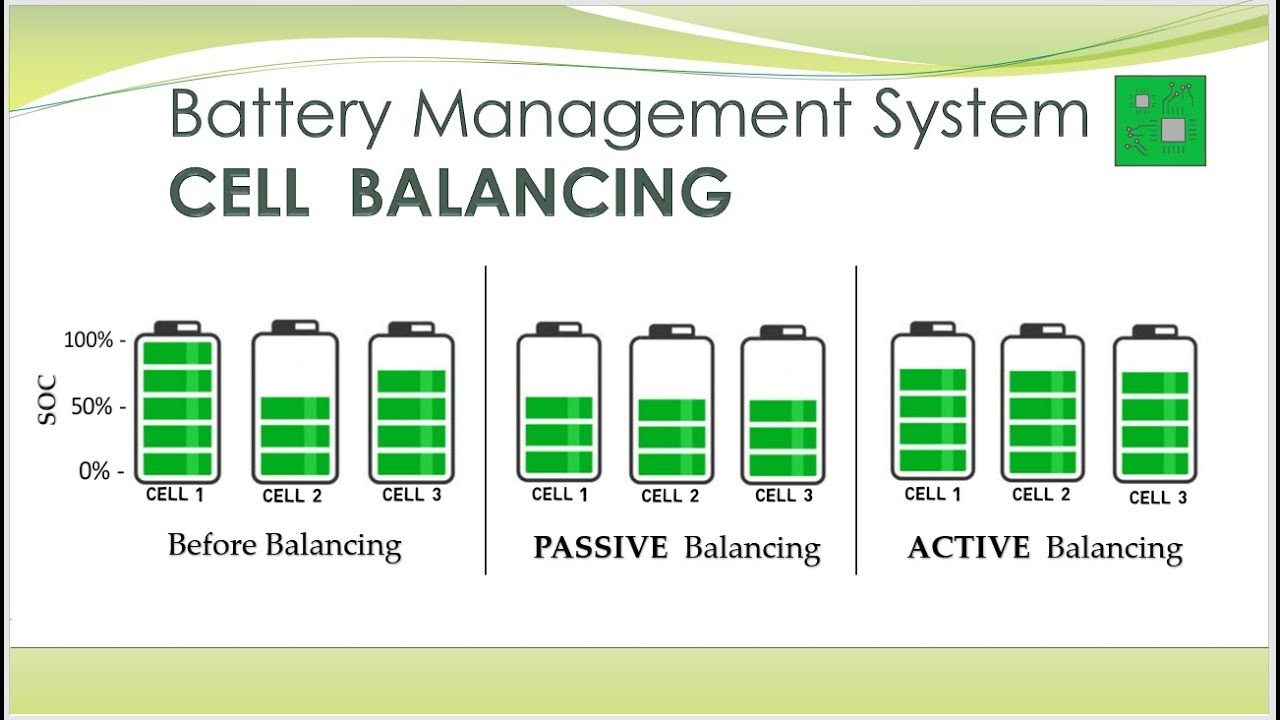
Normally two types of cell balancing are used in BMS.
Passive Balancing: This method involves using passive resistors or dissipative elements to drain excess charge from cells with higher voltages. It is a simple and energy-efficient method but may be slower.
Active Balancing: Active balancing involves transferring energy from cells with higher voltages to cells with lower voltages using active electronic circuits. This method is faster and more effective but can consume additional energy.
We hope that you could understand the Battery Management System completely. In case of any doubts, don’t forget to comment below.